Vaalea orakas (hedgehog mushroom)
- Finnish
- vaalea orakas · VAA-le-a O-ra-kas
- Word help
- vaalea = pale · ora = spine / thorn
- English
- hedgehog mushroom, wood hedgehog
- Latin
- Hydnum repandum
A pale, irregular mushroom that looks ordinary from above. Turn it over: the underside is covered in soft spines, not gills. That is the ora that gives it its Finnish name.
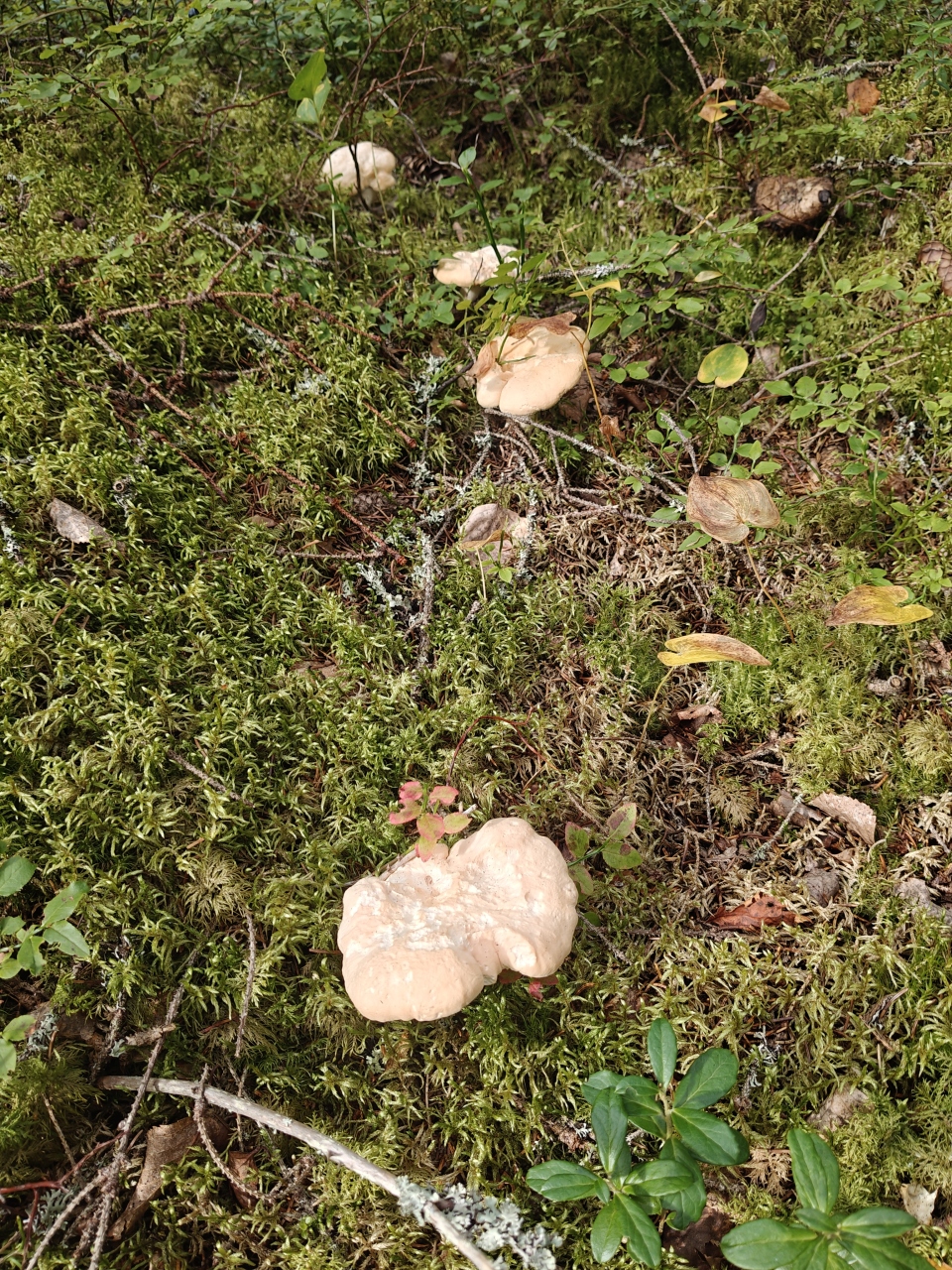
Key identifying features
- Colour: cream to pale yellowish-beige, through the whole mushroom.
- Cap: dry, matte, often wavy or lobed rather than a neat circle.
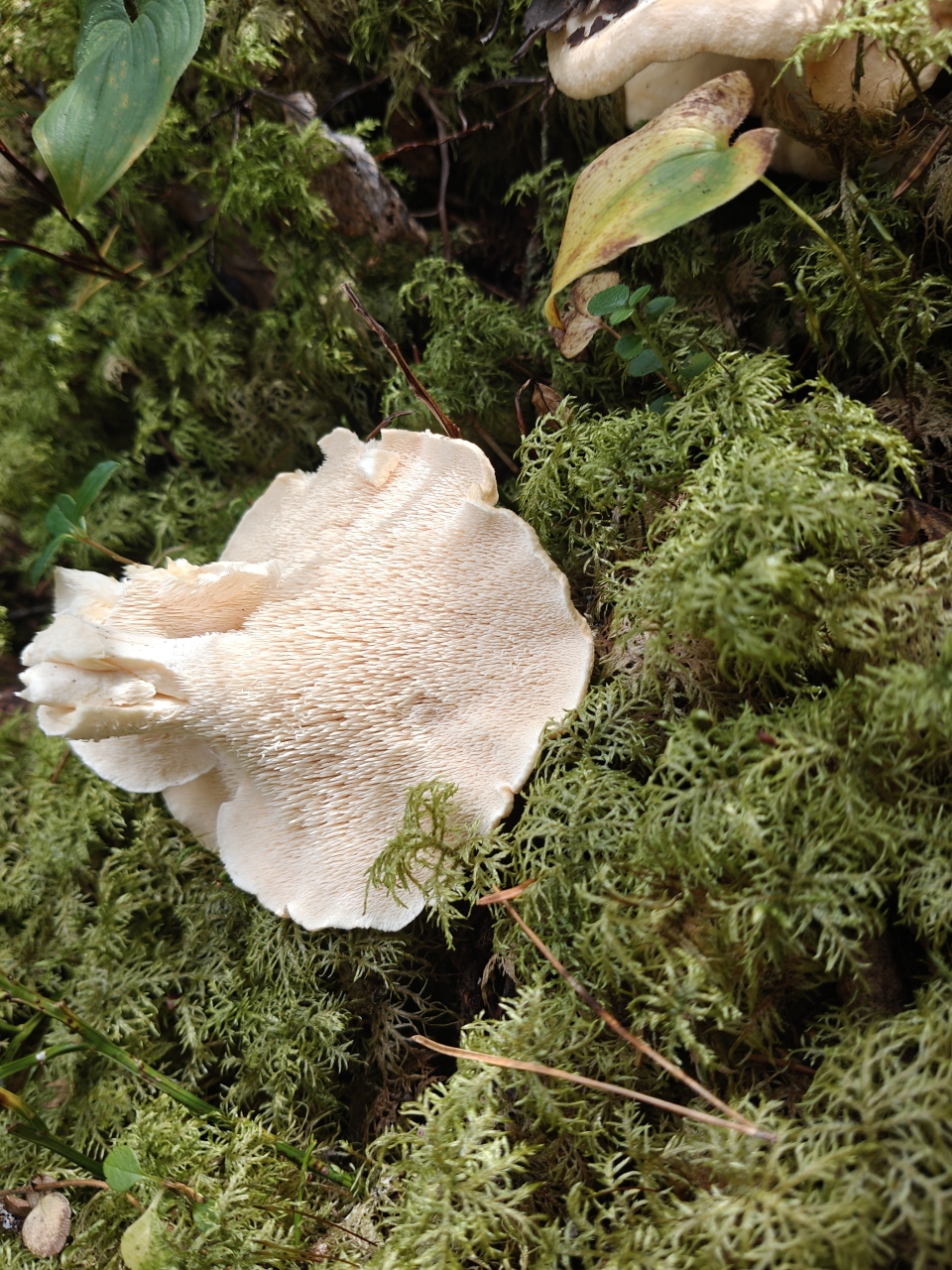
- Underside: dense, brittle spines instead of gills or pores. Finnish: ora (spine).
- Stem: thick and the same pale colour. The spines continue a short way down the stem.
- Flesh: white, firm but a little brittle.
Once you have seen the spines, this mushroom is hard to confuse with anything dangerous. There are no poisonous lookalikes.
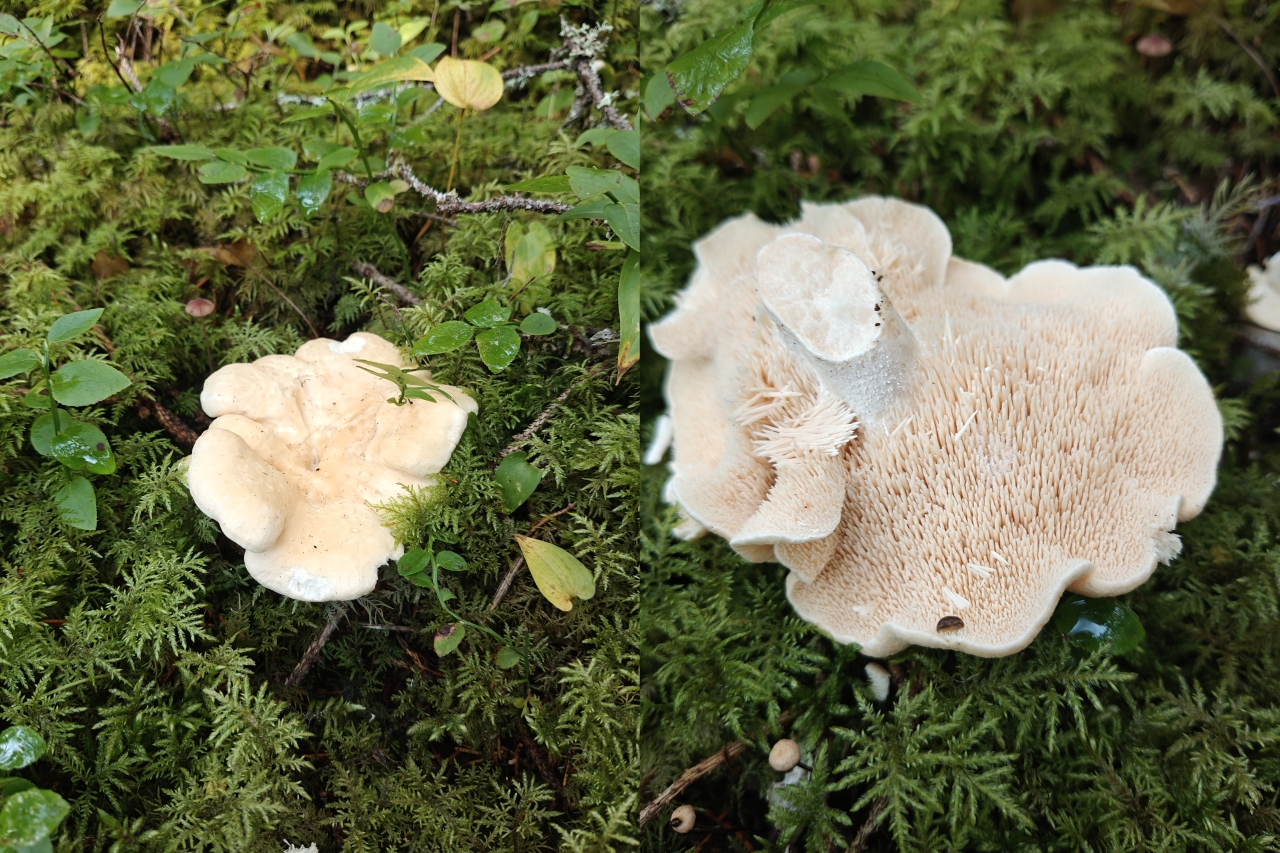
Where and when to look
- Season in Finland: August–October, often best from mid-August.
- Habitat: mossy spruce forest and mixed woodland. Common in southern and central Finland; scarcer further north.
- How they grow: usually a few together, not huge carpets. When you find one, search the moss nearby.
From above they blend into pale wood and dry leaves. Slow down and look for that uneven cream cap in the green moss.
Rusko-orakas (terracotta hedgehog)
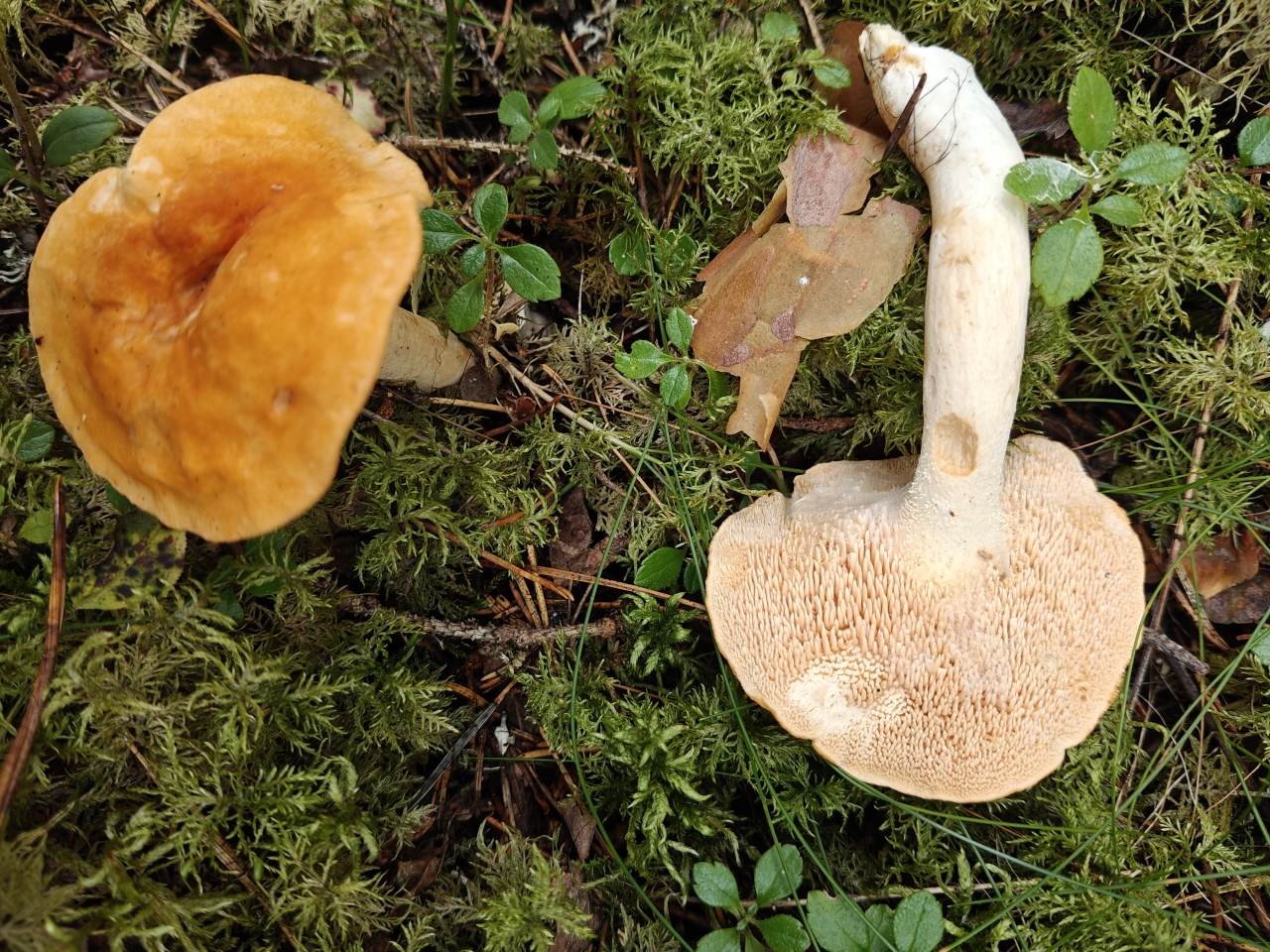
Rusko-orakas RUS-ko-O-ra-kas (Hydnum rufescens) is the one mushroom you may mix with vaalea orakas. It is also a good edible. Finns often pick both into the same basket. Rusko means brownish or russet: the cap is usually more orange-brown, and the mushroom is often a little slimmer.
Apart from colour, look at where the spines stop:
- Vaalea orakas: spines continue down the stem.
- Rusko-orakas: spines cover the cap only and end cleanly at the stem.
Old rusko-orakas can taste a little more bitter than vaalea orakas. Cook it well, as with all orakas, and it is still good food.
How to clean
- Cut off the earthy stem base in the forest.
- Scrape the messy spines off soon after picking. They break easily, and the flesh underneath is then easy to inspect.
- Brush remaining needles and sand. Avoid a long soak; a quick rinse is enough if needed.
- Cut large ones so you can see the inside is firm and pale.
Finnish tip: putsaa sienet metsässä (clean mushrooms in the forest). Spines left on in a warm basket get crushed and hide dirt.
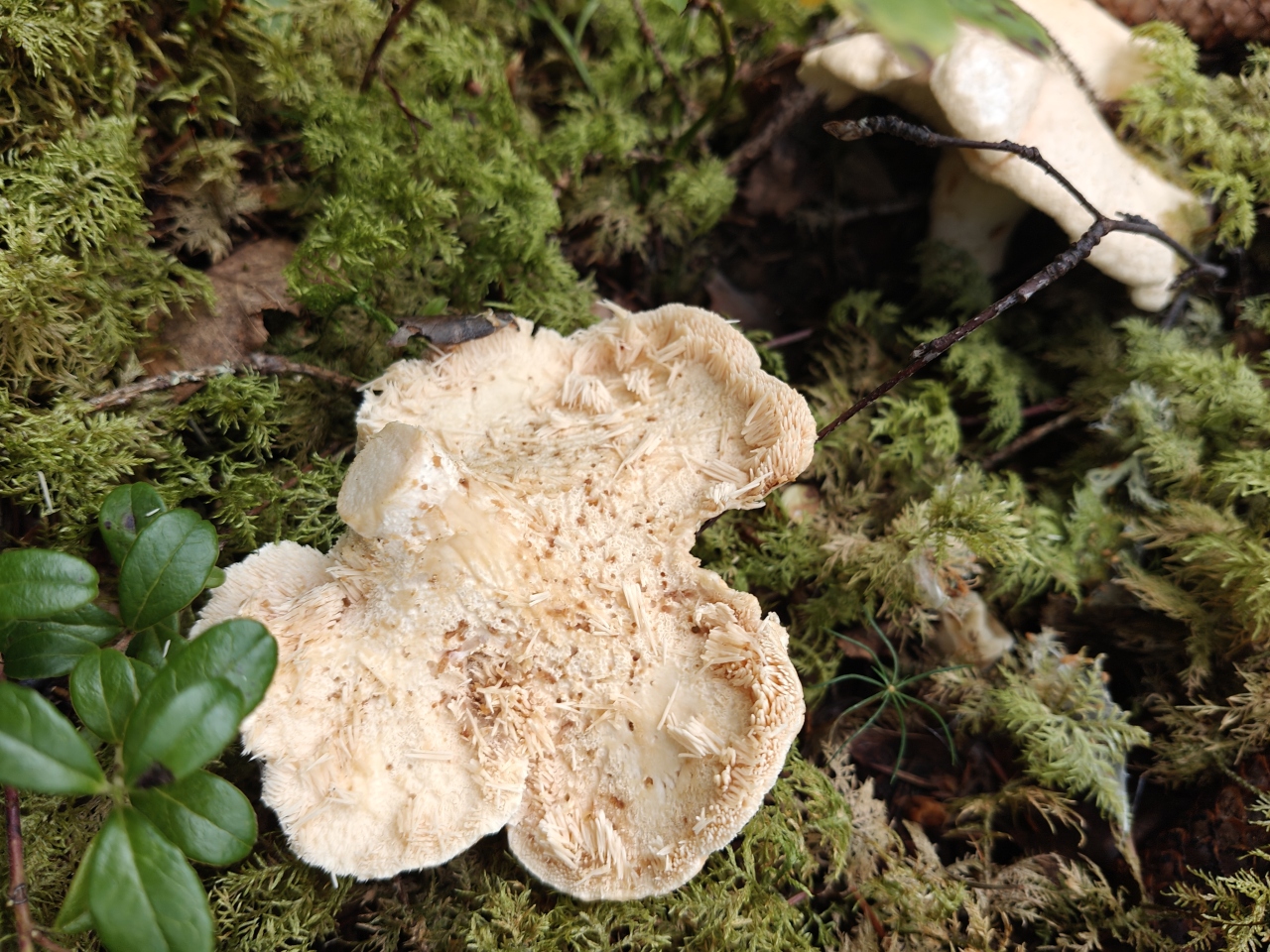
Bugs and larvae
Insect damage is easy to miss while the spines are still on. Scrape first, then look:
- Tiny dark pinholes in the white flesh mean larvae have been in the cap.
- Cut away tunnelled parts. If the mushroom is more hole than flesh, leave it in the forest.
- Young, firm ones are usually cleaner than large old ones.
Cooking and conserving
Cook orakas well. Raw or undercooked pieces can taste bitter; thorough cooking takes that edge away. Then they are mild and good in a pan, in a sauce, or in a stew.
Best store method: lightly sauté and freeze, the same idea as kanttarelli. Chop, dry-fry until the liquid is gone, then freeze in portions. Young firm slices can also be dried at ≤ 50 °C.
Full methods: Recipes & conserving.