Herkkutatti (porcini)
- Finnish
- herkkutatti · HERK-ku-tat-ti
- Word help
- herkku = delicacy / treat · tatti = bolete (sponge mushroom)
- English
- porcini, cep, penny bun
- Italian
- porcini: hugely popular in Italian cooking (risotto, pasta, dried packs in every market)
- Latin
- Boletus edulis
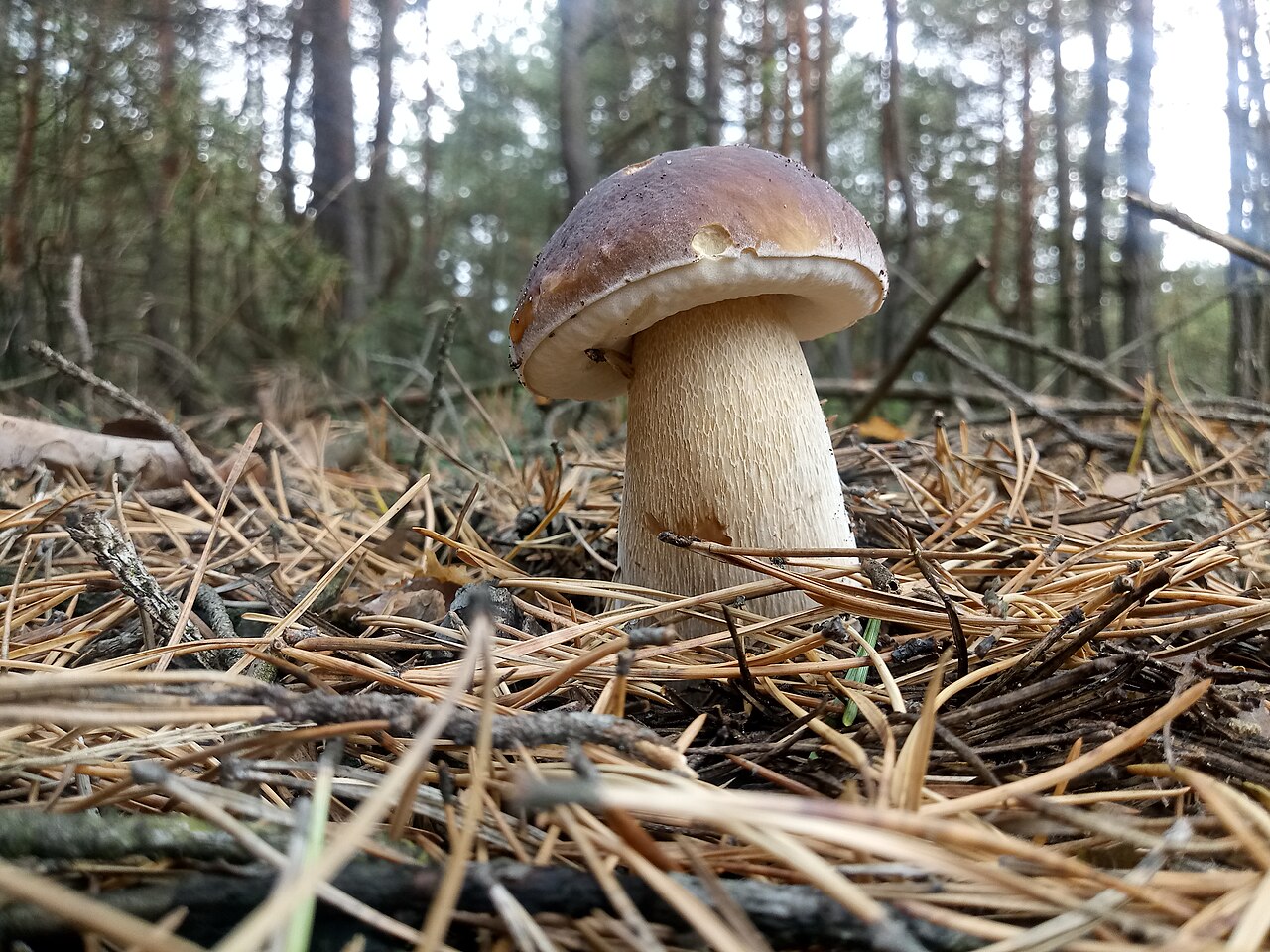
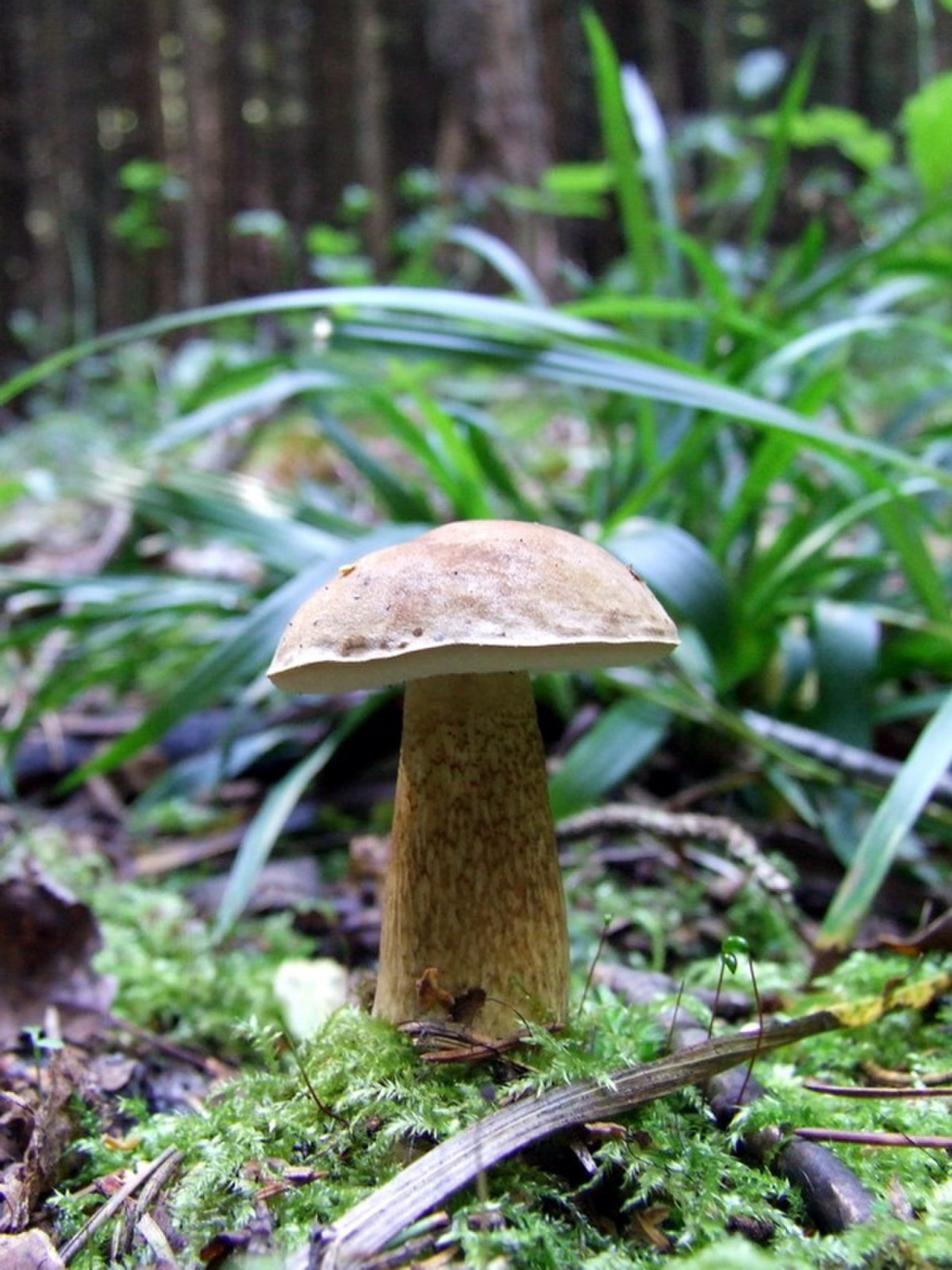
Thick stem, brown bun-like cap, and a soft sponge (tubes) under the cap instead of gills. One of Europe’s most famous wild mushrooms, especially in Italy, where dried porcini are a kitchen classic.
Key identifying features
- Underside: a sponge of tiny tubes, white in young mushrooms and yellow-green when older. Not gills. This is a key safety point. None of the Finnish mushrooms with a layer of tubes are poisonous.
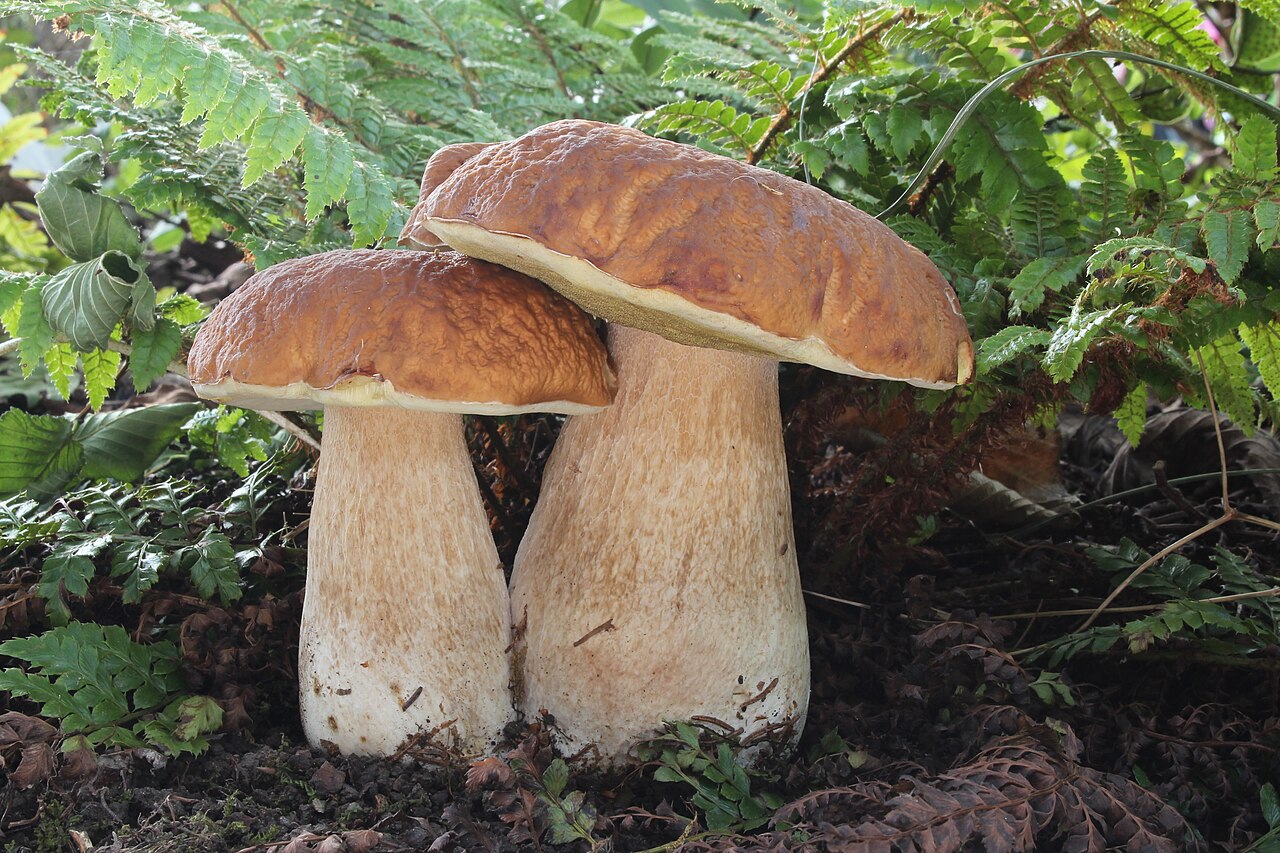
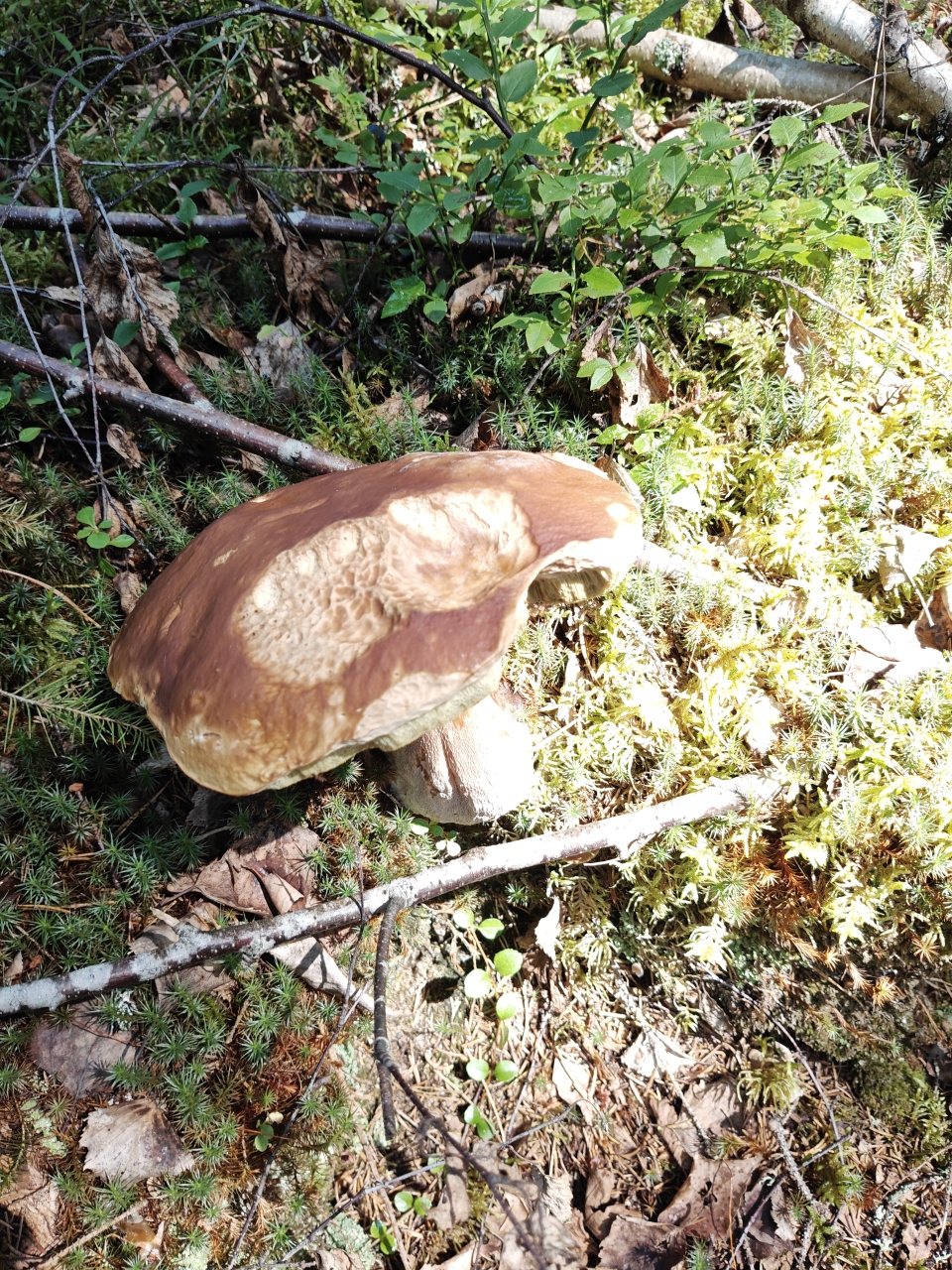
- Cap: brown, smooth, like a bread bun. Young caps are tight and rounded; older ones flatten.
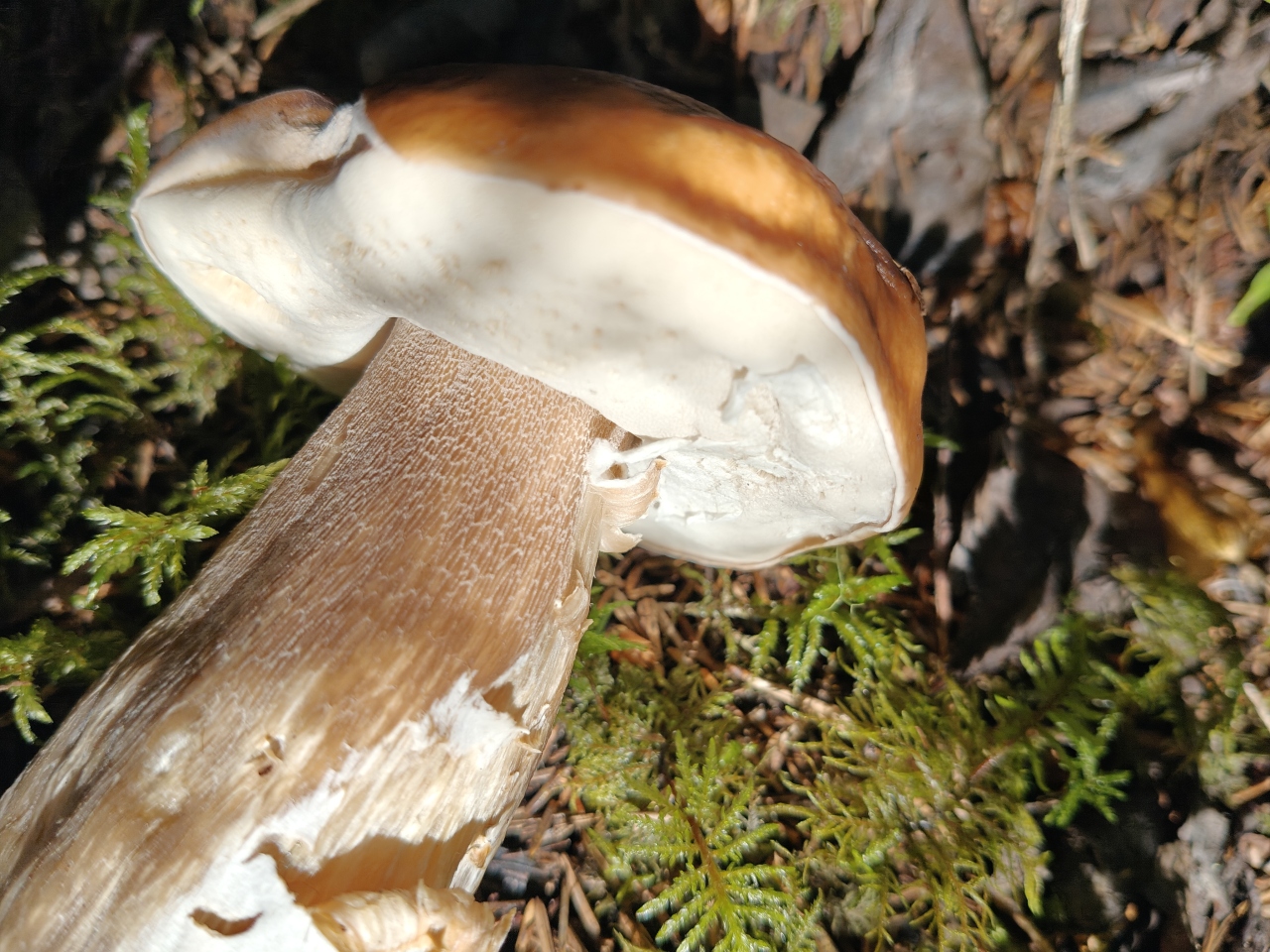
- Stem: thick, pale, often with a fine net pattern (verkko = net) near the top.
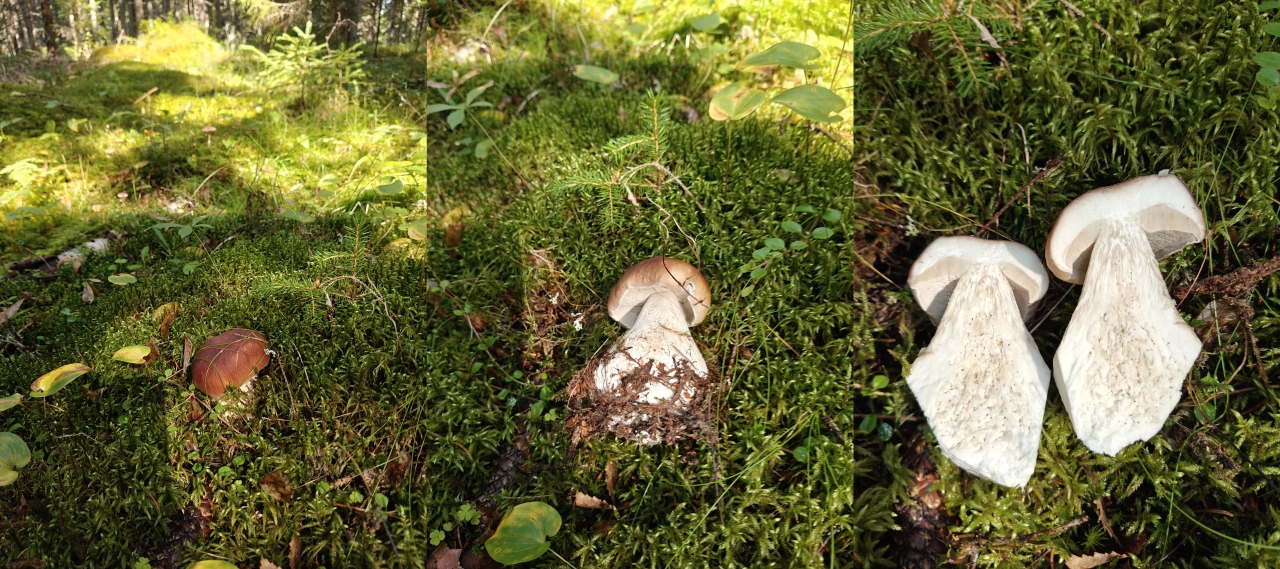
- Flesh: white, firm. It does not turn blue when cut.
- Taste tip (tiny nibble, then spit): mild and nutty, never bitter.
There are a lot of other bolete species (ones that have pores) so the cap, the stem with a net pattern and the firm flesh are key identifying features.
Where and when to look
- Season in Finland: mainly late summer to early autumn (often August–September).
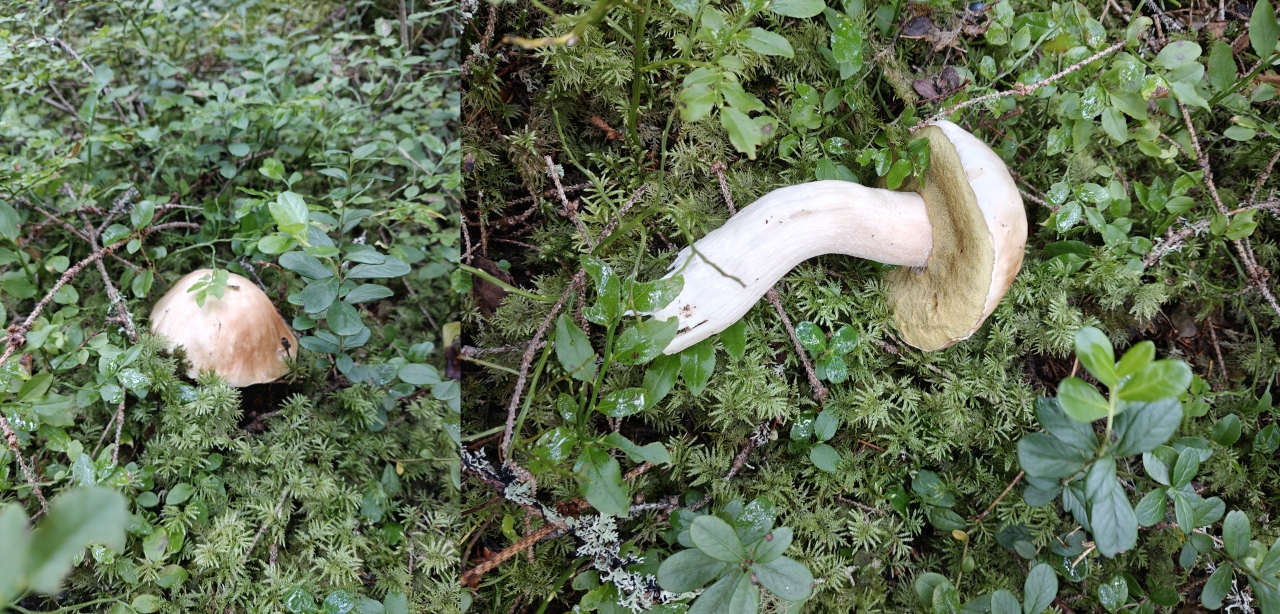
- Habitat: under spruce, pine, or birch, often at forest edges and mossy clearings.
- How they grow: alone or a few together. Check the same good spots after warm rain.
Look for a brown “bun” pushing up through moss. Young firm ones are best for the kitchen; very old soft ones are often full of larvae.
Sappitatti (bitter bolete)
Sappitatti ((SAP-pi-tat-ti) looks similar but is not used for food. It is not a dangerous poison mushroom; it is simply horribly bitter. People say it tastes as bitter as vomit. One small piece can ruin a whole pot of soup.
How to tell them apart:
- Taste test: touch your tongue to a tiny bit of the white flesh, then spit it out and rinse. Herkkutatti is mild. Sappitatti is instantly bitterly foul.
- Pores (sponge colour): sappitatti often shows pinkish pores as it ages; herkkutatti goes from white to yellow-olive, never pink. The pores are usually larger than with herkkutatti, about the size as made with a sewing pin, whereas for herkkutatti they are hardly visible.
- Stem net: both can show a net pattern, so do not rely on that alone. Use taste + pore colour together.
Finnish word: sappi means bile / gall, a reminder of the bitterness.
Punikkitatti (rough-stemmed boletes)
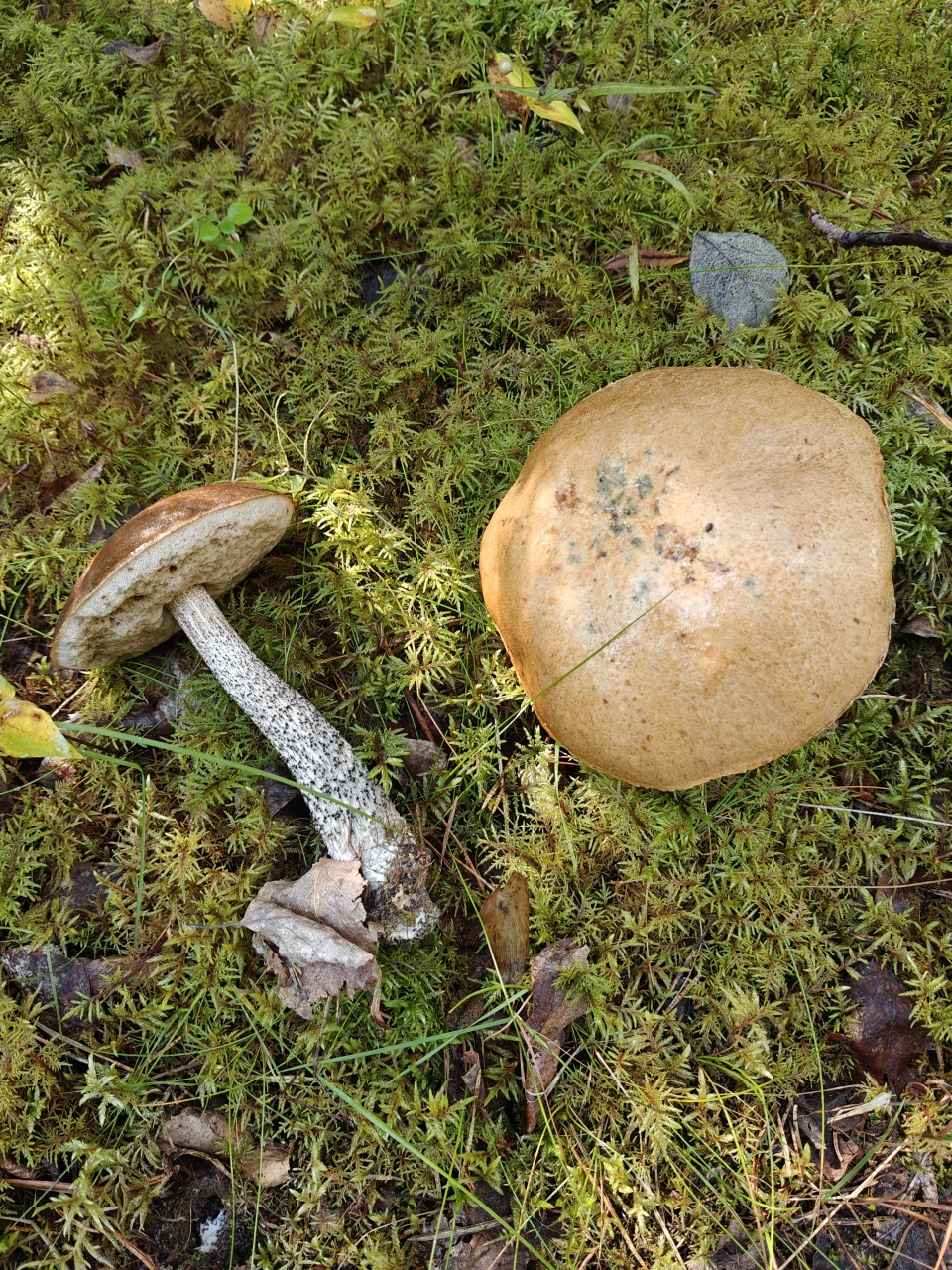
The punikkitatti PU-nik-ki-tat-ti family also has a sponge of tubes under the cap, so beginners often mix them with herkkutatti. They are not a problem mushroom: Finns pick them on purpose. They are considered tasty, but you must cook them long enough.
How to recognise the family:
- Stem: covered in small dark spots or scales, not a fine blonde net like herkkutatti.
- Flesh when cut: turns purple, grey, or black. Herkkutatti flesh stays white.
- Names: männynpunikkitatti (pine punikkitatti) grows with pine; koivunpunikkitatti (birch punikkitatti) grows with birch.
Kitchen rule: cook for at least 20 minutes. Undercooked punikkitatti can cause stomach pain. Once well cooked, they are good eating.
How to clean (bolete method)
- Cut off the earthy bottom of the stem, but not too much as the stem is just as good as the cap.
- Wipe the cap; peel only if the skin is very dirty or slimy.
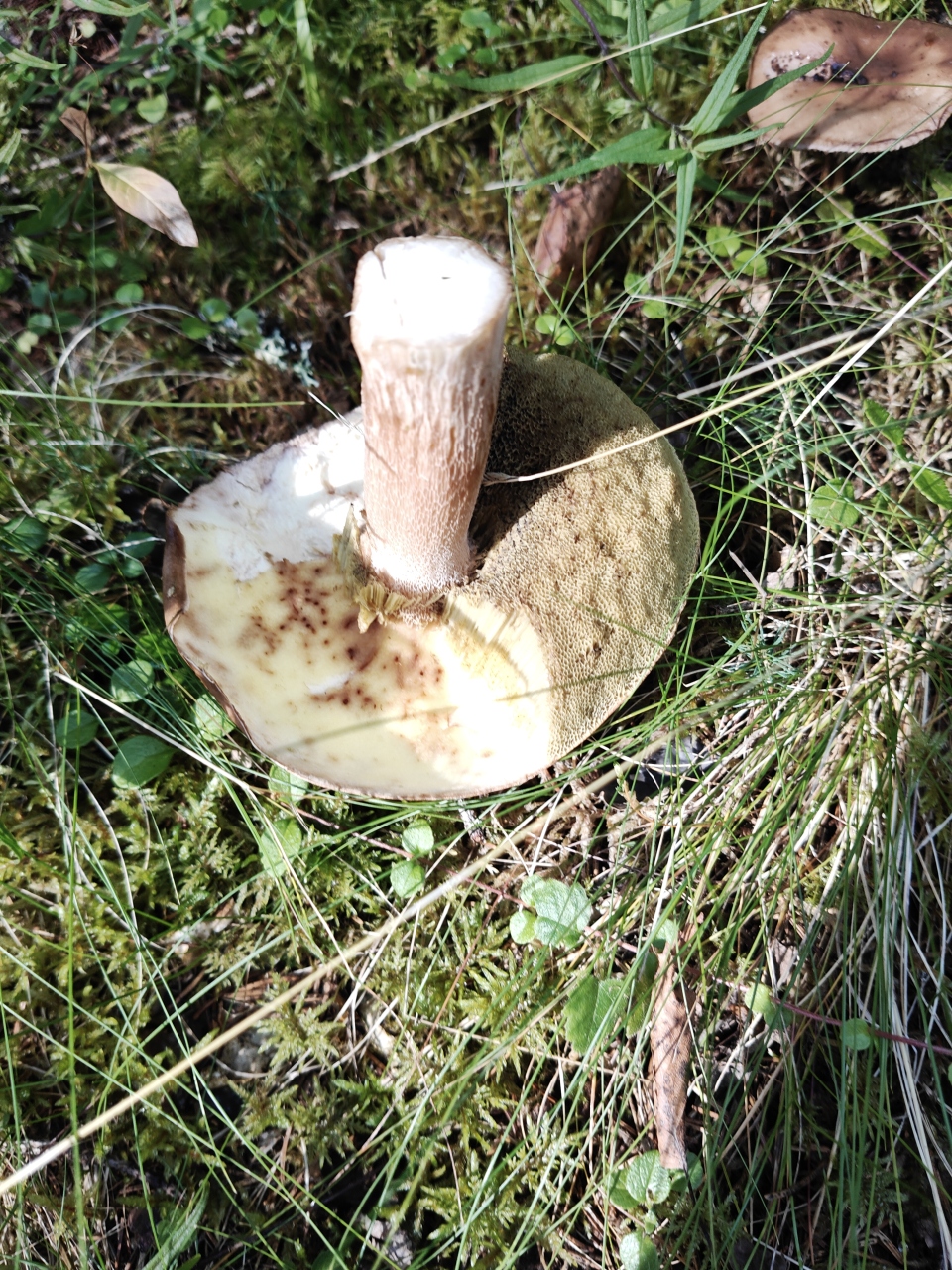
- Check the sponge (tube layer) under the cap:
- Young white tubes can stay on.
- Soft, wet, greenish-yellow tubes are often removed: scrape or cut the tube layer away.
- Slice the mushroom to inspect for tunnels before you cook a large batch.
Bugs and larvae: check carefully
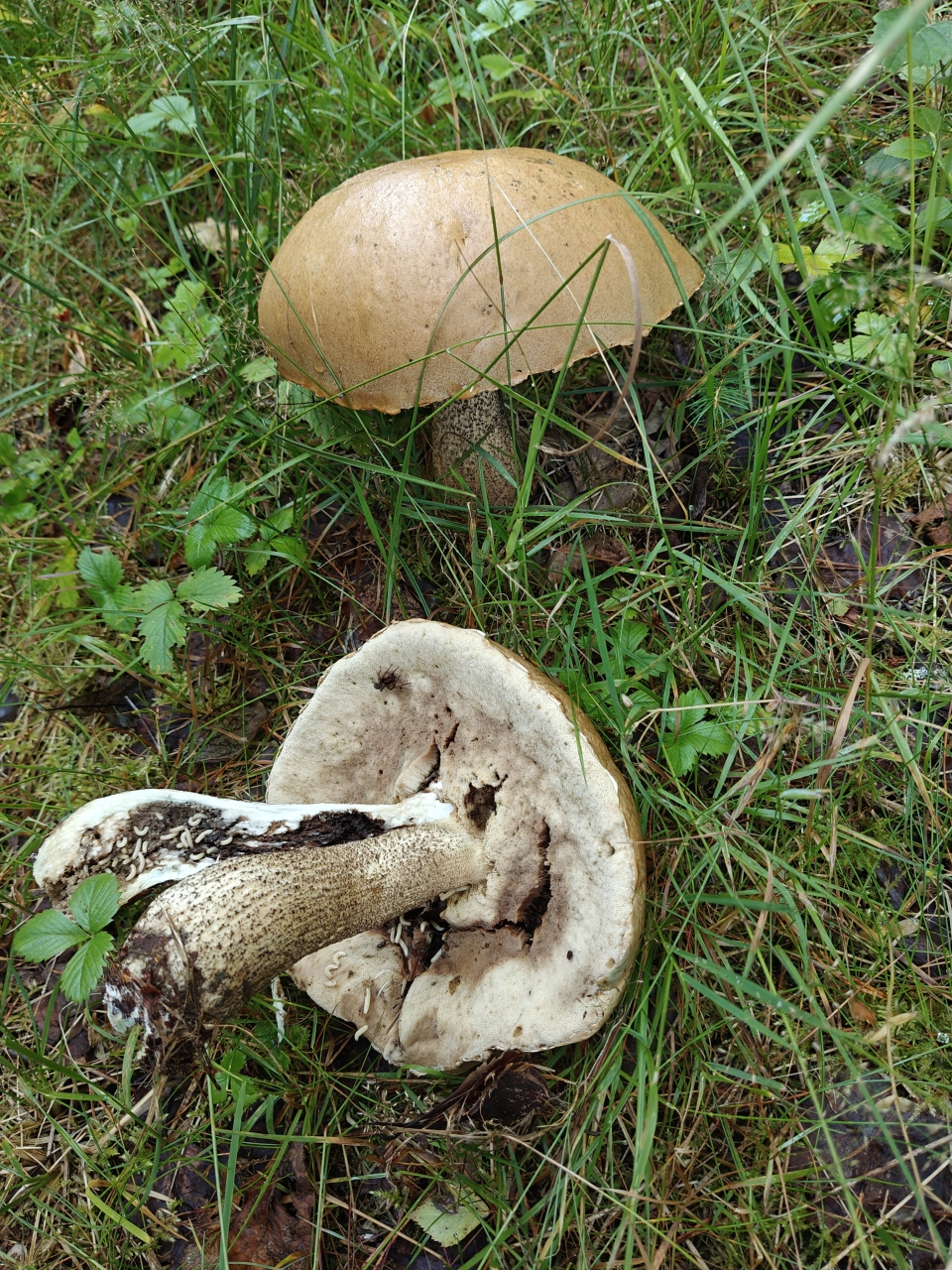
Herkkutatti is famous for hiding insect larvae in the stem and cap.
- Cut the stem lengthwise. Brown tunnels mean larvae have been eating inside.
- Slice the cap. Small holes or soft brown tracks = cut those parts away.
- If the mushroom is more hole than flesh, discard it (leave it for the forest animals).
- Young, firm buttons are usually cleaner than large older ones.
Tip: start cleaning soon after picking. Larvae keep eating in a warm kitchen.
Best way to conserve
Drying is the traditional method (also how Italian porcini are sold). Dry at a low temperature and do not exceed 50 °C. Slices should be fully dry and snap cleanly before you jar them.
You can also freeze firm, clean pieces after a light sauté. For risotto and pasta ideas, see Recipes & conserving.